A smaller Colombian harvest and the new EU rules: what roasters in Europe should know
Colombia produced 15% less coffee in 2025/26, its coffee still trades high and the EU deforestation rules start on 30 December 2026. What it means if you buy from Nariño.
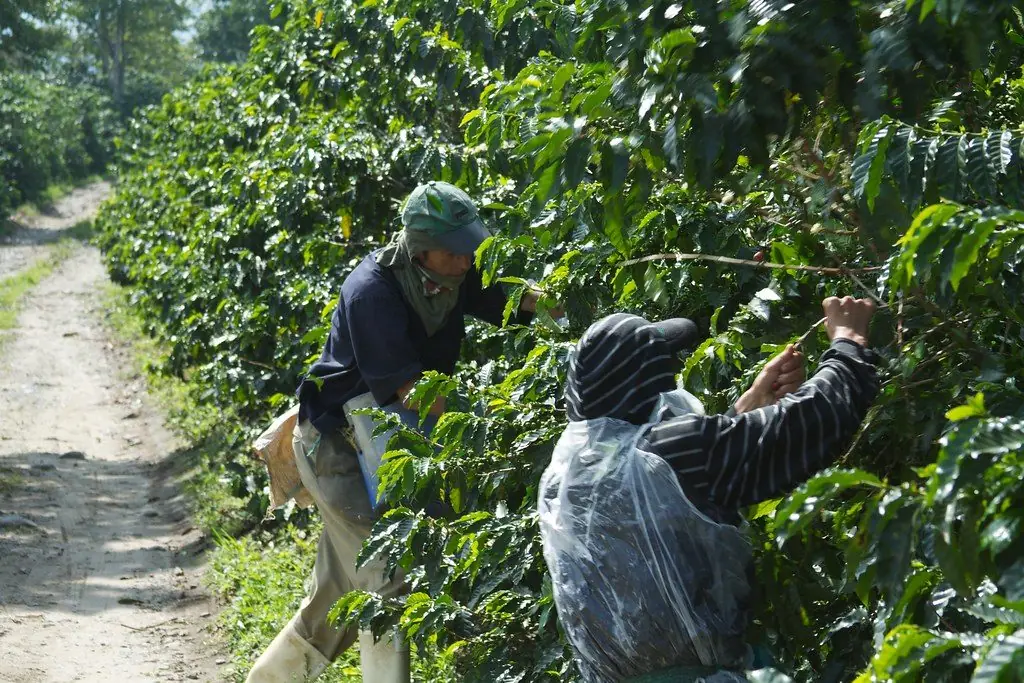
Every season, the people who roast coffee in Europe ask us the same two things: how is the harvest, and what is the price doing. This season there is a third question, the new EU rules on deforestation. This is where things stand at the end of November 2026. The sources are at the bottom.
A smaller crop in Colombia
The Colombian Coffee Growers Federation (FNC) closed the 2025/26 coffee year, from October 2025 to September 2026, at 12.65 million bags of 60 kilos. That is 15% less than the 14.87 million bags of the year before. Exports fell 12%, to 11.78 million bags. Heavy rain was the main reason given during the year, and by the end of it El Niño was starting to form, which in the Andes usually means drier, warmer months.
September 2026 was the first month in a long time with more coffee than a year earlier, up 6%. One good month does not make a harvest, but it shows the trees recovering.
Prices: the market eases, Colombia stays high
On the New York exchange, arabica closed at around 260 US cents per pound on 24 November 2026, well below the records of the last two years. The reason is mostly Brazil: a much bigger arabica crop is expected there, and the International Coffee Organization expects the first world surplus in five years.
Colombian coffee has not followed all the way down. The ICO indicator for Colombian milds was close to 340 cents per pound in mid November. With less coffee in Colombia, good Colombian lots keep their premium.
The EU deforestation rules (EUDR)
From 30 December 2026, large and medium companies that place coffee on the EU market must show that it does not come from land deforested after 31 December 2020 and that it was produced legally. Micro and small companies have until 30 June 2027. Those dates come from Regulation (EU) 2025/2650. Green and roasted coffee are both covered, and soluble coffee was added in July 2026 with a later date.
In practice it means knowing exactly where each coffee was grown, down to the geolocation of the plot. In Nariño, where the average farm is under one hectare, that is a great many small plots, and the work starts at origin.
Will Colombian coffee cost more this season?
Probably not less. The world market is easing because of Brazil, but there is less Colombian coffee, and specialty lots are priced on cup quality, not only on the exchange. We quote every lot separately, at the price of the moment.
Is there enough coffee from Nariño?
There is, but it comes in small lots. Most farms are under a hectare, so a lot can be just a few bags. If you are after a specific profile, ask for samples early.
Does the EUDR affect me if I only roast?
It affects every company that places coffee on the EU market, and what you have to do depends on your role and your size. Ask your supplier for the due diligence information of each lot, and check the official guidance of the European Commission.
Does it also apply to roasted coffee?
Yes. Green, roasted and decaffeinated coffee are all in scope. Soluble coffee comes in later.
When is the harvest in Nariño?
It depends on the municipality and the altitude, and the sources do not agree on a single window. High farms ripen slowly and pick over several months. Ask us what is being picked right now.
Sources
- Colombia's 2025/26 coffee production and exports fall by over 12%, Roast to Cup
- How much coffee did Colombia produce in the 2025-26 coffee year?, Inheritance Coffee
- Colombia to produce 12.2 million bags in calendar year 2026, StoneX
- El Niño emerges as bigger threat to Colombia's coffee harvest, The Logical Indian
- Coffee this week: arabica round-trips to flat, World Coffee Index
- Arabica coffee prices fall to four-month low, Global Coffee Report
- EU Deforestation Regulation, European Coffee Federation
- Soluble coffee enters the EUDR scope, Fluna